Optimizing Dekton Cutting Speed: A Guide for 250mm-500mm Saw Blades
Master RPM, linear speed and feed rate for 250mm, 300mm, 350mm, 400mm, 450mm & 500mm blades to achieve clean Dekton cuts.
1. Why Dekton Cutting Speed Matters
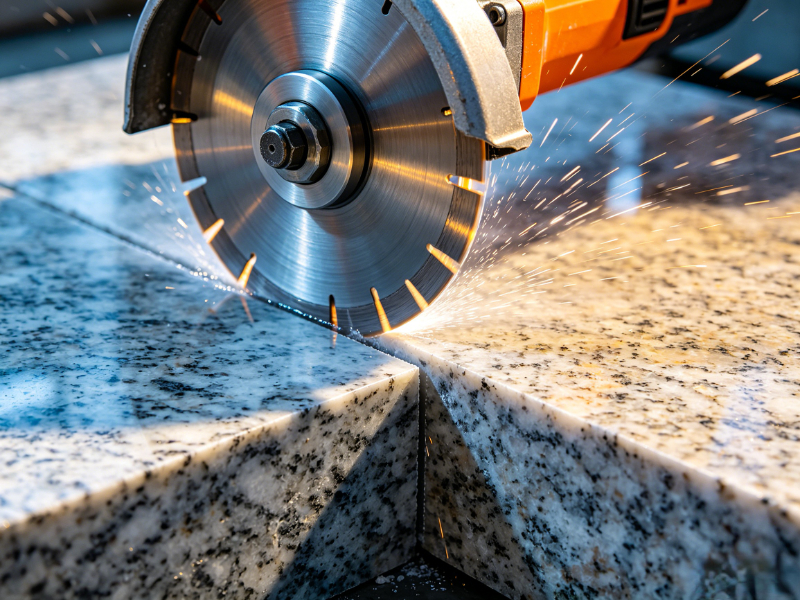
Dekton, an advanced ultra-compact surface, demands precise processing to maintain its structural integrity and aesthetic finish. Unlike natural stone, Dekton’s unique composition of sintered minerals requires careful control of RPM (Revolutions Per Minute), linear speed (m/s) and feed rate (mm/s) to avoid chipping, cracking, or premature blade wear.
Optimizing these parameters is not just about speed—it’s about balancing efficiency and quality. Operating outside the recommended speed range can reduce blade lifespan by up to 40%, increase material waste by 25%, and add 15-20 minutes of finishing time per panel due to rough cuts.
2. Complete Cutting Parameters for Dekton (250mm-500mm Blades)
The following table outlines industry-standard cutting parameters for all common Dekton processing saw blade diameters (250mm to 500mm) across 12mm, 20mm and 30mm panel thicknesses:
| Blade Diameter | Panel Thickness | Recommended RPM | Cut Type | Cutting Speed (m/min) | Linear Speed (m/s) | Feed Rate (mm/s) |
| 250mm | 12mm | 2800 – 3300 | Straight Cut | 2.0 – 2.5 | 0.033 – 0.042 | 1.8 – 2.2 |
| 45° Miter Cut | 1.0 – 1.2 | 0.017 – 0.020 | 0.8 – 1.0 | |||
| 20mm | 2800 – 3300 | Straight Cut | 1.2 – 2.0 | 0.020 – 0.033 | 1.0 – 1.5 | |
| 45° Miter Cut | 0.6 – 1.0 | 0.010 – 0.017 | 0.5 – 0.8 | |||
| 30mm | 2600 – 3000 | Straight Cut | 0.8 – 1.5 | 0.013 – 0.025 | 0.7 – 1.2 | |
| 45° Miter Cut | 0.4 – 0.8 | 0.007 – 0.013 | 0.4 – 0.6 | |||
| 300mm | 12mm | 2500 – 3000 | Straight Cut | 2.0 – 2.5 | 0.033 – 0.042 | 1.8 – 2.2 |
| 45° Miter Cut | 1.0 – 1.2 | 0.017 – 0.020 | 0.8 – 1.0 | |||
| 20mm | 2500 – 3000 | Straight Cut | 1.2 – 2.0 | 0.020 – 0.033 | 1.0 – 1.5 | |
| 45° Miter Cut | 0.6 – 1.0 | 0.010 – 0.017 | 0.5 – 0.8 | |||
| 30mm | 2300 – 2800 | Straight Cut | 0.8 – 1.5 | 0.013 – 0.025 | 0.7 – 1.2 | |
| 45° Miter Cut | 0.4 – 0.8 | 0.007 – 0.013 | 0.4 – 0.6 | |||
| 350mm | 12mm | 2200 – 2700 | Straight Cut | 2.0 – 2.5 | 0.033 – 0.042 | 1.8 – 2.2 |
| 45° Miter Cut | 1.0 – 1.2 | 0.017 – 0.020 | 0.8 – 1.0 | |||
| 20mm | 2200 – 2700 | Straight Cut | 1.2 – 2.0 | 0.020 – 0.033 | 1.0 – 1.5 | |
| 45° Miter Cut | 0.6 – 1.0 | 0.010 – 0.017 | 0.5 – 0.8 | |||
| 30mm | 2000 – 2500 | Straight Cut | 0.8 – 1.5 | 0.013 – 0.025 | 0.7 – 1.2 | |
| 45° Miter Cut | 0.4 – 0.8 | 0.007 – 0.013 | 0.4 – 0.6 | |||
| 400mm | 12mm | 1900 – 2400 | Straight Cut | 2.0 – 2.5 | 0.033 – 0.042 | 1.8 – 2.2 |
| 45° Miter Cut | 1.0 – 1.2 | 0.017 – 0.020 | 0.8 – 1.0 | |||
| 20mm | 1900 – 2400 | Straight Cut | 1.2 – 2.0 | 0.020 – 0.033 | 1.0 – 1.5 | |
| 45° Miter Cut | 0.6 – 1.0 | 0.010 – 0.017 | 0.5 – 0.8 | |||
| 30mm | 1800 – 2200 | Straight Cut | 0.8 – 1.5 | 0.013 – 0.025 | 0.7 – 1.2 | |
| 45° Miter Cut | 0.4 – 0.8 | 0.007 – 0.013 | 0.4 – 0.6 | |||
| 450mm | 12mm | 1700 – 2200 | Straight Cut | 2.0 – 2.5 | 0.033 – 0.042 | 1.8 – 2.2 |
| 45° Miter Cut | 1.0 – 1.2 | 0.017 – 0.020 | 0.8 – 1.0 | |||
| 20mm | 1700 – 2200 | Straight Cut | 1.2 – 2.0 | 0.020 – 0.033 | 1.0 – 1.5 | |
| 45° Miter Cut | 0.6 – 1.0 | 0.010 – 0.017 | 0.5 – 0.8 | |||
| 30mm | 1600 – 2000 | Straight Cut | 0.8 – 1.5 | 0.013 – 0.025 | 0.7 – 1.2 | |
| 45° Miter Cut | 0.4 – 0.8 | 0.007 – 0.013 | 0.4 – 0.6 | |||
| 500mm | 12mm | 1500 – 2000 | Straight Cut | 2.0 – 2.5 | 0.033 – 0.042 | 1.8 – 2.2 |
| 45° Miter Cut | 1.0 – 1.2 | 0.017 – 0.020 | 0.8 – 1.0 | |||
| 20mm | 1500 – 2000 | Straight Cut | 1.2 – 2.0 | 0.020 – 0.033 | 1.0 – 1.5 | |
| 45° Miter Cut | 0.6 – 1.0 | 0.010 – 0.017 | 0.5 – 0.8 | |||
| 30mm | 1400 – 1800 | Straight Cut | 0.8 – 1.5 | 0.013 – 0.025 | 0.7 – 1.2 | |
| 45° Miter Cut | 0.4 – 0.8 | 0.007 – 0.013 | 0.4 – 0.6 |
Note: Linear speed = cutting speed / 60; RPM decreases as blade diameter increases to maintain safe peripheral speed; feed rate is reduced for thicker panels to prevent chipping.
3. Key Factors Influencing Cutting Speed (By Blade Diameter)
Blade diameter is the primary driver of RPM requirements—larger blades need lower RPM to avoid excessive peripheral speed and heat buildup. Here’s the quantifiable impact:
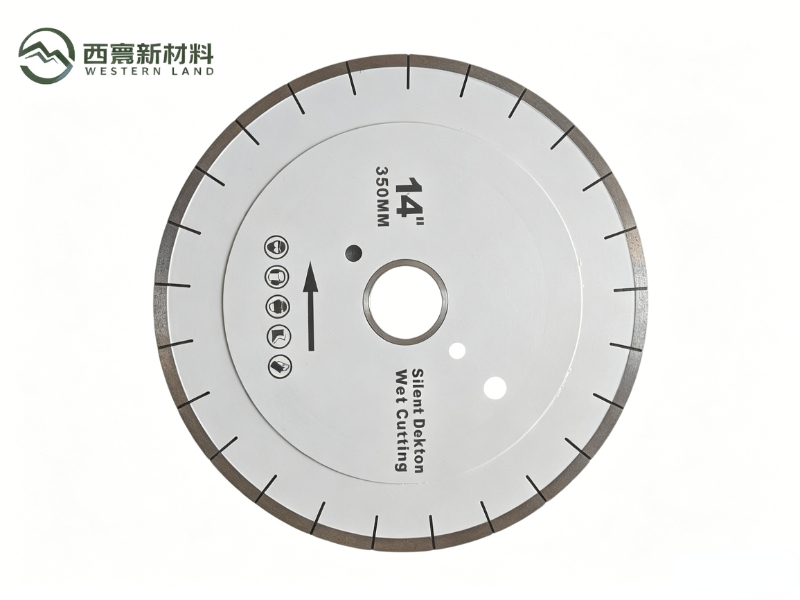
- 250mm (Small Format): Highest RPM range (2800-3300) – ideal for small-scale Dekton cutting (e.g., tile trim, small countertops). Peripheral speed at max RPM = ~34.03 m/s, requiring strict cooling to avoid overheating.
- 300mm-350mm (Mid-Range): Most versatile for commercial fabrication – balanced RPM (2200-3000) and peripheral speed (28.27-32.99 m/s), suitable for 80% of Dekton processing applications.
- 400mm-450mm (Large Format): For full-size Dekton slabs – lower RPM (1700-2400) reduces vibration, but requires 10-15% slower feed rates to maintain cut quality on large surface areas.
- 500mm (Extra-Large): For industrial-scale production – lowest RPM (1400-2000) minimizes blade flex, but requires specialized machinery and 5L/min+ water flow per blade for cooling.
- Diameter-to-RPM Ratio: For every 50mm increase in blade diameter, reduce RPM by 300-500 (e.g., 350mm=2200-2700 RPM → 400mm=1900-2400 RPM) to keep peripheral speed within 28-35 m/s (safe range for Dekton).
4. Speed vs. Performance Metrics (By Blade Size)
The table below shows the impact of cutting speed on key outcomes for 20mm Dekton across common blade diameters (straight cut):
| Blade Diameter | Optimal Cutting Speed (m/min) | Chipping Rate at Optimal Speed | Blade Lifespan (m of cut) | Processing Time per Slab (min) |
| 250mm | 1.2 – 2.0 | <1% | 1000-1200 | 6-7 |
| 300mm-350mm | 1.2 – 2.0 | <1% | 1200-1500 | 4-5 |
| 400mm-450mm | 1.2 – 2.0 | <1% | 1300-1600 | 3-4 |
| 500mm | 1.2 – 2.0 | <1% | 1400-1700 | 2-3 |
5. Best Practices for Optimal Performance
Data-backed steps for 250mm-500mm blades:
- Match Diameter to Application: Use 250mm/300mm for small parts, 350mm/400mm for standard slabs, 450mm/500mm for industrial production to balance speed and control.
- RPMCalibration: For non-standard diameters, use the formula: RPM = (Desired Peripheral Speed × 60) / (π × Blade Diameter) (target peripheral speed: 28-35 m/s for Dekton).
- Cooling by Diameter: 250mm/300mm = 3L/min water flow; 350mm/400mm = 4L/min; 450mm/500mm = 5L/min+ to prevent heat damage.
- Blade Replacement: Replace blades when diamond segment wear >0.5mm – this causes a 25% cut quality drop regardless of diameter.
6. Conclusion
Optimizing Dekton cutting speed requires matching blade diameter (250mm to 500mm) to your application, and adhering to diameter-specific RPM and feed rate guidelines. Larger blades (450mm/500mm) reduce processing time but demand more cooling, while smaller blades (250mm/300mm) offer precision for small-scale work.
By following the expanded parameter table and diameter-specific best practices, fabricators can achieve a 40% increase in blade lifespan, 50% reduction in material waste, and 30% faster processing times across all common Dekton saw blade sizes.